Brite
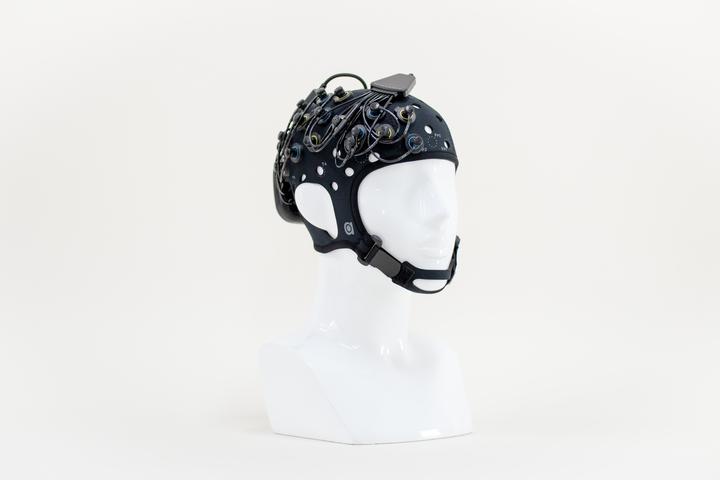
A wearable & flexible multi-channel NIRS device for brain oxygenation measurement
Publications using the Brite
The Influence of Media in Purchasing Decisions for Recycled Construction and Demolition Waste Products: An Functional Near Infrared Spectroscopy Study
The increasing hazards caused by construction and demolition (C&D) waste is an inevitable problem in the development of the construction industry. Many countries have successively launched many policies to encourage and guide the recycling of …
A neuro-cardiac self-regulation therapy to improve autonomic and neural function after SCI: a randomized controlled trial protocol
Spinal cord injury (SCI) is associated with autonomic imbalance and significant secondary conditions, including cardiac and brain dysfunction that adversely impact health and wellbeing. This study will investigate the effectiveness …
Modifications in Prefrontal Cortex Oxygenation in Linear and Curvilinear Dual Task Walking: A Combined fNIRS and IMUs Study
Increased oxygenated hemoglobin concentration of the prefrontal cortex (PFC) has been observed during linear walking, particularly when there is a high attention demand on the task, like in dual-task (DT) paradigms. Despite the knowledge that …
Employing cardiac and respiratory features extracted from fNIRS signals for mental workload classification
Functional Near-Infrared Spectroscopy (fNIRS) is gaining popularity in detection and classification of cognitive and emotional states. In addition to hemodynamic responses arising from functional activity changes in the brain areas of interest, fNIRS …
fNIRS signal quality estimation by means of a machine learning algorithm trained on morphological and temporal features
Functional near infrared spectroscopy (fNIRS) is used for brain hemodynamic assessment. Cortical hemodynamics are reliably estimated when the recorded signal has a sufficient quality. This is acquired when fNIRS optodes have proper scalp coupling. A …
Short report on research trends during the COVID-19 pandemic and use of telehealth interventions and remote brain research in children with autism spectrum disorder
Following the outbreak of the COVID-19 pandemic, the delivery of face-to-face (F2F) therapeutic interventions and neuroimaging assessments for children with autism spectrum disorder has been disrupted. To resume interventions and assessments, many …
Cerebral oxygenation responses to head movement measured with near-infrared spectroscopy
Motion is disruptive to neuroimaging methods. Motion artefacts range from large amplitude and short frequency spikes to drifts in amplitude causing cofounds in the analysis or completely invalidating any analysis, leading to epoch exclusion of data. …
Fugl-Meyer hand motor imagination recognition for brain–computer interfaces using only fNIRS
As a relatively new physiological signal of brain, functional near-infrared spectroscopy (fNIRS) is being used more and more in brain–computer interface field, especially in the task of motor imagery. However, the classification accuracy based on …
Perceived Mental Workload Classification Using Intermediate Fusion Multimodal Deep Learning
A lot of research has been done on the detection of mental workload (MWL) using various bio-signals. Recently, deep learning has allowed for novel methods and results. A plethora of measurement modalities have proven to be valuable in this task, yet …
Exploring the brain activity related to missing penalty kicks: an fNIRS study
Despite having a near perfect control over a ball, professional football/soccer players often miss penalties. Psychological factors (anxiety) are often named as explanations for these misses. A commonly used terminology is 'choking under pressure'. …
Signal quality index: an algorithm for quantitative assessment of functional near infrared spectroscopy signal quality
We propose the signal quality index (SQI) algorithm as a novel tool for quantitatively assessing the functional near infrared spectroscopy (fNIRS) signal quality in a numeric scale from 1 (very low quality) to 5 (very high quality). The algorithm …
Using Functional Near-Infrared Spectroscopy to Detect a Fear of Heights Response to a Virtual Reality Environment
Over the past decades, virtual reality (VR) technology has gained significant popularity and interest, both in research as well as on the consumer market. One promising application area of VR is virtual reality exposure therapy (VRET), which treats …
Brain activation in virtual reality for attention guidance
Virtual Reality (VR) not only offers great opportunities in terms of entertainment, it is also widely applicable in the field of attention guidance, medicine and psychology. The distinction between VR and ordinary media is the 360$$^∘ $$ - also known …
Study Protocol – Insight 46 Cardiovascular: A Sub-study of the MRC National Survey of Health and Development
Dementia cognitive decline vascular cognitive impairment functional near infrared spectroscopy (fNIRS) A B S T R A C T The commonest causes of dementia are Alzheimer's disease and vascular cognitive impairment. Although these conditions have been …
Simultaneous functional near infrared spectroscopy of the brain and bladder
Background: Worldwide 2.3 billion individuals are affected by bladder disease. The current evaluative test is invasive, associated with complications and often declined. Non-invasive evaluation of bladder hemodynamics using continuouswave …
Brief Report: Classification of Autistic Traits According to Brain Activity Recoded by fNIRS Using $ε$-Complexity Coefficients
Individuals with ASD have been shown to have different pattern of functional connectivity. In this study, brain activity of participants with many and few autistic traits, was recorded using an fNIRS device, as participants preformed an interpersonal …
Role of exercise, cold, and the biological clock on energy balance in humans: The ACTIBATE study
Cold exposure has been proposed as a potential tool to face obesitysince it is able to increase energy expenditure (i.e., cold induced thermogenesis –CIT). This increase is partially mediated by brown adipose tissue (BAT). Nevertheless, little is …
A mini-review on functional near-infrared spectroscopy (fNIRS): Where do we stand, and where should we go?
This mini-review is aimed at briefly summarizing the present status of functional near-infrared spectroscopy (fNIRS) and predicting where the technique should go in the next decade. This mini-review quotes 33 articles on the different fNIRS basics …
Functional near infrared spectroscopy (fNIRS) in pigmented subjects: a maneuver to confirm sufficient transcutaneous photon transmission for measurement of hemodynamic change in the anterior cortex
© 2019 SPIE Background: A requisite for fNIRS studies of cortical blood flow is that sufficient photons are transmitted transcutaneously for the fluctuations in cerebral hemoglobin oxygenation that occur during neuronal activation to be detected. …
A Review on the Use of Wearable Functional Near-Infrared Spectroscopy in Naturalistic Environments
The development of novel miniaturized wireless and wearable functional near-infrared spectroscopy (fNIRS) devices has paved the way for new functional brain imaging that could revolutionize the cognitive research fields. Over the past few decades, …