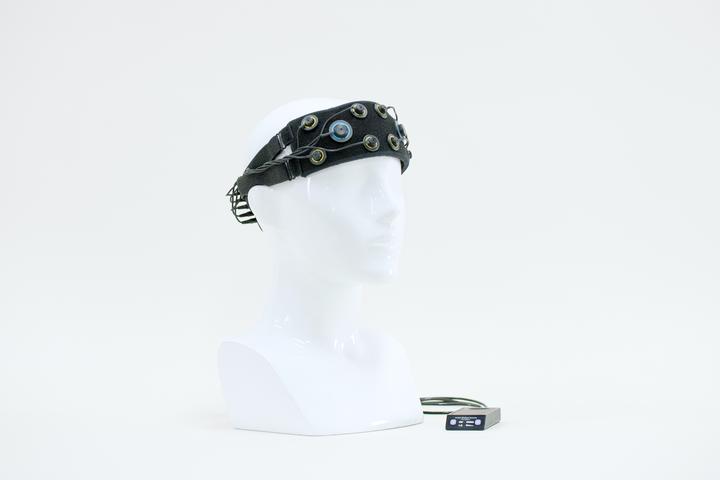
Publications using the OctaMon
A scoping review of functional near-infrared spectroscopy studies of reading development in children aged 6–12
Significance Functional near-infrared spectroscopy (fNIRS) offers several advantages for neuroimaging in children, yet its use in research on cognitive development, particularly reading, remains limited. Aim This scoping review focuses on fNIRS …
Balancing load, memory, and movement: Effects of cognitive reserve on dual-task performance in older adults
Cognitive reserve (CR) is thought to mitigate age-related cognitive decline by supporting more efficient or flexible allocation of neural resources during cognitively demanding situations, yet its neural and behavioral signatures during challenging …
Classifying Mental Workload Using Psychophysiological Measurement and Machine Learning
The objective of this study was to apply diverse machine learning algorithms to differentiate low and high MWL levels using a variety of psychophysiological signals (obtained from fNIRS, ECG, and pupillometry). In this study, we assessed various …
Differences in gait and prefrontal cortical activity between recurrent fallers and non-fallers with Parkinson's disease during single- and dual-task walking
Background Falls are common in people with Parkinson's disease (PD) and are associated with gait impairments, particularly under dual-task conditions. Although gait characteristics differ between fallers and non-fallers, it remains unclear whether …
Comparing the Cognitive and Physiological Effects of Traditional and Virtual Reality Exercise in Overweight/Obese Adults: A Pilot Study
Research suggests that overweight/obese adults (BMI ≥ 25 kg/m2) have an elevated risk of cognitive decline. Although exercise is recommended to improve both physical and cognitive health, adherence is often low in this population. Virtual reality …
Exploring cognitive load in anatomy education: a study of 3D virtual reality and 2D learning environments using fNIRS
Introduction: Although virtual reality (VR) is increasingly deployed as a tool for education, little is known about how learning modality influences cognitive processing or whether wearable neuroimaging technologies can accurately classify cognitive …
Virtual Reality–Based Pain Modulation in Subacute Musculoskeletal Injury: Functional Near-Infrared Spectroscopy Study of Neural and Behavioral Correlates
Background: Acute traumatic musculoskeletal injuries often result in persistent pain and disability despite physical recovery. Virtual reality (VR) provides an innovative approach for overcoming treatment barriers and may help address psychological …
Effects of slow oscillatory HD-tDCS on creative cognition and prefrontal cortex activity: A multimodal EEG-fNIRS study
Creativity relies on the dynamic interaction between the default mode (DMN) and frontoparietal control (FPCN) networks, supported by controlled attentional processing and associative strategies. Slow wave activity (SWA: 0.1– 1 Hz) is a critical …
Exploring multimodal neurophysiological synchrony and behaviour in choir performance: a preliminary study.
Choir singing is a widely practiced activity that offers multiple benefits, as demonstrated by psychophysiological studies in both healthy and pathological populations. However, the processes underlying these outcomes are still not fully understood. …
Prefrontal hemodynamic responses during video learning across academic disciplines: an fNIRS study
Different academic disciplines involve different types of knowledge and learning processes, which may be reflected in variation in prefrontal hemodynamic responses during learning. To simulate real learning scenarios, we used multidisciplinary …
Muscle Fatigue in Dynamic Movement: Limitations and Challenges, Experimental Design, and New Research Horizons
Research on muscle fatigue during dynamic movement using surface electromyography (sEMG) constitutes a significant challenge within biomechanics. Despite a degree of standardization, measurements and their resultant findings continue to attract …
Prefrontal cortex connectivity during right and left hand dexterity tests in younger and older adults
Background Age can negatively impact activation and connectivity among prefrontal cortex (PFC) regions during demanding motor functions, such as hand dexterity tasks. The study objective was to compare functional connectivity between PFC regions …
Brain-in-the-Loop Learning for Intelligent Vehicle Decision-Making
The inflexible human-autonomy relationship within autonomous driving scenarios still has not realized synergetic intelligence, therefore unable to provide adaptive and context-sensitive decision-making and sometimes leading to violation of human …
Investigating dual-task biomarkers of subjective cognitive decline using functional near-infrared spectroscopy
Older adults with subjective cognitive decline (SCD) may be at a greater risk of cognitive impairment than older adults without SCD (i.e., non-SCD). This study examined dual-task changes in cerebral oxygenation and performance to determine whether …
Recognising Emotions from the Voice: A tDCS and fNIRS Double-Blind Study on the Role of the Cerebellum in Emotional Prosody
Background: Emotional prosody refers to the variations in pitch, pause, melody, rhythm, and stress of pronunciation conveying emotional meaning during speech. Although several studies demonstrated that the cerebellum is involved in the network …
Bilateral dynamic cerebral autoregulation assessment during endovascular treatment in large‐vessel occlusion stroke
Recanalization by endovascular treatment (EVT) is effective in acute ischaemic stroke caused by large-vessel occlusion. Better understanding of the pathophysiology could possibly identify targets for improving peri-procedural management and thereby …
Personalized versus fixed tactile cueing in Parkinson’s disease: Protocol for a randomized controlled trial on gait automaticity
Background Gait automaticity, the ability of the brain to control locomotion with minimal use of executive-attentional resources, is altered in people with Parkinson’s disease (PD). Recently, we showed that step-synchronized tactile cueing improved …
Altered descending modulation in patients with chronic primary low back pain assessed by non-invasive functional near-infrared spectroscopy
Low back pain (LBP) is a significant public health issue. Despite current medical imaging and neurophysiological tests, up to 90% of patients lack a clear cause, leading to a diagnosis of chronic primary low back pain (CPLP). Non-invasive functional …
Assessing the objective and subjective impacts of nature for reducing cognitive fatigue
Exposure to nature can help recover cognitive fatigue by enhancing working memory, attention control, and cognitive flexibility. However, these effects may be impacted by multiple confounding variables, including engagement level and baseline …