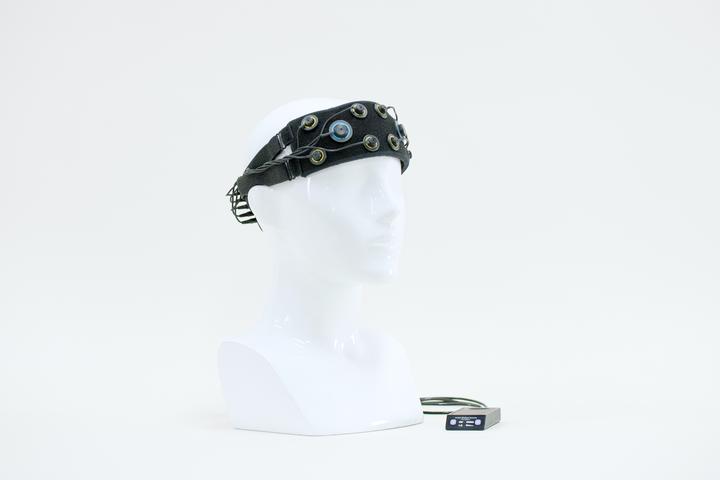
Publications using the OctaMon
Physiological correlates of cognitive load in laparoscopic surgery
Laparoscopic surgery can be exhausting and frustrating, and the cognitive load experienced by surgeons may have a major impact on patient safety as well as healthcare economics. As cognitive load decreases with increasing proficiency, its robust …
Exercise-based cardiac rehabilitation improves cognitive function among patients with cardiovascular disease
Purpose: To investigate the effects of cardiac rehabilitation (CR) exercise training on cognitive performance and whether the changes are associated with alterations in prefrontal cortex (PFC) oxygenation among patients with cardiovascular disease. …
Signal quality index: an algorithm for quantitative assessment of functional near infrared spectroscopy signal quality
We propose the signal quality index (SQI) algorithm as a novel tool for quantitatively assessing the functional near infrared spectroscopy (fNIRS) signal quality in a numeric scale from 1 (very low quality) to 5 (very high quality). The algorithm …
Effect of Different Intensities of Transcranial Direct Current Stimulation on Postural Response to External Perturbation in Patients With Parkinson's Disease
Background: Habituation of postural response to perturbations is impaired in people with Parkinson's disease (PD) due to deficits in cortico-basal pathways. Although transcranial direct current stimulation (tDCS) modulate cortico-basal networks, it …
Levodopa Facilitates Prefrontal Cortex Activation During Dual Task Walking in Parkinson Disease
Background. Although dopaminergic medication improves dual task walking in people with Parkinson disease (PD), the underlying neural mechanisms are not yet fully understood. As prefrontal cognitive resources are involved in dual task walking, …
Changes in Cortical Activation during Dual-Task Walking in Individuals with and without Visual Vertigo
Background and Purpose: Persons with vestibular disorders are known to have slower gait speed with greater imbalance and veering during dual-task walking than healthy individuals, but the cerebral mechanisms are unknown. The purpose of this study was …
Unveilling the cerebral and sensory contributions to automatic postural control during dual-task standing
Objectives: The postural control dual-task literature has demonstrated greater postural stability during dual-task in comparison to single task (i.e., standing balance alone through the examination of multiple kinetic and kinematic measures. This …
A functional near-infrared spectroscopy (fNIRS) examination of how self-initiated sequential movements become automatic
The neural mechanisms underlying movement automaticity have been investigated using PET and fMRI and more recently functional near-infrared spectroscopy (fNIRS). As fNIRS is an emerging technique, the objective of the present study was to replicate …
Simultaneous functional near infrared spectroscopy of the brain and bladder
Background: Worldwide 2.3 billion individuals are affected by bladder disease. The current evaluative test is invasive, associated with complications and often declined. Non-invasive evaluation of bladder hemodynamics using continuouswave …
Combining Frontal Transcranial Direct Current Stimulation With Walking Rehabilitation to Enhance Mobility and Executive Function: A Pilot Clinical Trial
Objectives: This pilot study assessed whether frontal lobe transcranial direct current stimulation (tDCS) combined with complex walking rehabilitation is feasible, safe, and shows preliminary efficacy for improving walking and executive function. …
DESIGN AND EVALUATION OF A GUI FOR SIGNAL AND DATA ANALYSIS OF MOBILE FUNCTIONAL NEAR-INFRARED SPECTROSCOPY SYSTEMS A Thesis by
Functional near-infrared spectroscopy (fNIRS) is an emerging neuro-imaging modality that can indicate cortical functionality with good temporal resolution (0.5-1 sec). Unlike fMRI, up to now, there is no standard method and a whole package that can …
Executive Control of Walking in People With Parkinson's Disease With Freezing of Gait
Background: Walking abnormalities in people with Parkinson's disease (PD) are characterized by a shift in locomotor control from healthy automaticity to compensatory prefrontal executive control. Indirect measures of automaticity of walking (eg, …
Exercise-Based cardiac rehabilitation modulates prefrontal cortex oxygenation during submaximal exercise testing in cardiovascular disease patients
The purpose of this study was to investigate if prefrontal cortex (PFC) oxygenation during incremental exercise is altered among cardiovascular disease (CVD) patients who completed 6 weeks of exercise-based cardiac rehabilitation (CR). Nineteen (male …
Is Cortical Activation During Walking Different Between Parkinson's Disease Motor Subtypes?
Parkinson's disease (PD) is often classified into tremor dominant (TD) and postural instability gait disorder (PIGD) subtypes. Degeneration of subcortical/cortical pathways is different between PD subtypes, which leads to differences in motor …
Neurovascular Coupling by Functional Near Infra-Red Spectroscopy and Sport-Related Concussion in Retired Rugby Players: The UK Rugby Health Project
Aim: This study investigated cerebral hemodynamic responses to a neurovascular coupling (NVC) test in retired contact athletes with a history of repeated mild traumatic brain injury (mTBI) and in controls with no history of mTBI. Methods: Twenty-one …
Obstacle Negotiation in Older Adults: Prefrontal Activation Interpreted Through Conceptual Models of Brain Aging
Background and Objectives: The influence of interindividual differences on brain activation during obstacle negotiation and the implications for walking performance are poorly understood in older adults. This study investigated the extent to which …
Prefrontal Cortex Activity and Gait in Parkinson's Disease With Cholinergic and Dopaminergic Therapy
Degradation of striatal dopamine in Parkinson's disease (PD) may initially be supplemented by increased cognitive control mediated by cholinergic mechanisms. Shift to cognitive control of walking can be quantified by prefrontal cortex activation. …
Prefrontal Cortex Activity During Walking: Effects of Aging and Associations With Gait and Executive Function
Background: Declines in gait parameters are common with aging and more pronounced in tasks with increased executive demand. However, the neural correlates of age-related gait impairments are not fully understood yet. Objectives: To investigate (a) …
Prefrontal Cortical Activation with Open and Closed-Loop Tactile Cueing When Walking and Turning in Parkinson Disease: A Pilot Study
Background and Purpose: Gait and turning impairments are common in people with Parkinson disease (PwPD). Tactile cues delivered in open- or closed-loop modalities may improve gait and turning in PwPD, but underlying mechanisms are unclear. Attention …
Reliability of fNIRS for noninvasive monitoring of brain function and emotion in sheep
The aim of this work was to critically assess if functional near infrared spectroscopy (fNIRS) can be profitably used as a tool for noninvasive recording of brain functions and emotions in sheep. We considered an experimental design including …