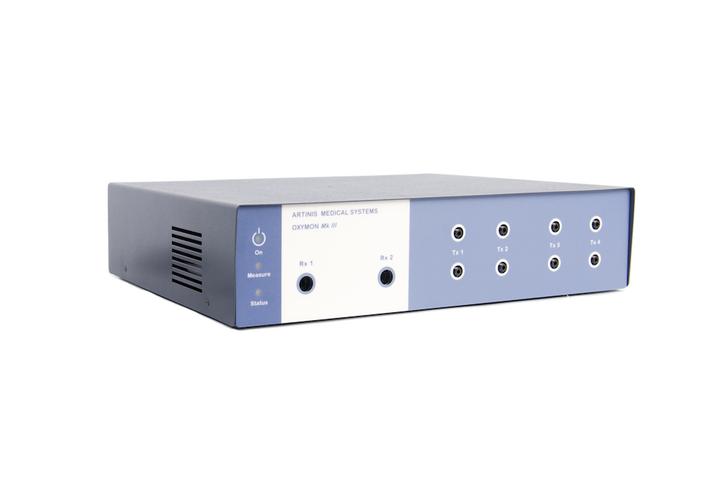
Publications using the OxyMon
Effects of sprint interval cycling on fatigue, energy, and cerebral oxygenation
Introduction Feelings of fatigue are reduced after a session of continuous exercise of low-to-moderate intensity lasting 20 min or more, but only when feelings of energy are increased. Feelings of fatigue and energy have not been described after …
Measuring reactive hyperemia in the lower limb using near-infrared spectroscopy
Near-infrared spectroscopy (NIRS) has been used to measure reactive hyperemia following a vascular occlusion. However, the procedures and methods of analysis used have varied. The purpose of the present study is to identify reproducible methods for …
Exercise oxidative skeletal muscle metabolism in adolescents with cystic fibrosis
Patients with cystic fibrosis (CF) are reported to have limited exercise capacity. There is no consensus about a possible abnormality in skeletal muscle oxidative metabolism in CF. Our aim was to test the hypothesis that abnormalities in oxygenation …
Local muscle oxygen consumption related to external and joint specific power
The purpose of the present study was to examine the effects of external work rate on joint specific power and the relationship between knee extension power and vastus lateralis muscle oxygen consumption (mVO2). We measured kinematics and pedal forces …
Acute cocoa flavanol improves cerebral oxygenation without enhancing executive function at rest or after exercise
Acute exercise-induced improvements in cognitive function are accompanied by increased (cerebral) blood flow and increased brain-derived neurotrophic factor (BDNF) levels. Acute cocoa flavanol (CF) intake may improve cognitive function, cerebral …
Effect of acute hypoxia on inspiratory muscle oxygenation during incremental inspiratory loading in healthy adults
Purpose: To non-invasively examine the effect of acute hypoxia and inspiratory threshold loading (ITL) on inspiratory muscles [sternocleidomastoid (SCM), scalene (SA) and parasternal (PS)] oxygenation in healthy adults using near-infrared …
Effective Connectivity of Cortical Sensorimotor Networks During Finger Movement Tasks: A Simultaneous fNIRS, fMRI, EEG Study
Recently, interest has been growing to understand the underlying dynamic directional relationship between simultaneously activated regions of the brain during motor task performance. Such directionality analysis (or effective connectivity analysis), …
Effects of anodal high-definition transcranial direct current stimulation on bilateral sensorimotor cortex activation during sequential finger movements: An fnirs study
Transcranial direct current stimulation (tDCS) is a non-invasive electrical brain stimulation technique that can modulate cortical neuronal excitability and activity. This study utilized functional near infrared spectroscopy (fNIRS) neuroimaging to …
High-intensity Interval training enhances mobilization/functionality of endothelial progenitor cells and depressed shedding of vascular endothelial cells undergoing hypoxia
Purpose: Exercise training improves endothelium-dependent vasodilation, whereas hypoxic stress causes vascular endothelial dysfunction. Monocyte-derived endothelial progenitor cells (Mon-EPCs) contribute to vascular repair process by differentiating …
Improving peripheral and central vascular adjustments during exercise through a training program in adolescents with obesity
Objective: The effects of a training program (TP) on muscle microvascularization during exercise remained to be explored in adolescents with obesity. We hypothesized that a TP would lead to better microvascular adaptations to exercise in skeletal …
Posture-related changes in brain functional connectivity as assessed by wavelet phase coherence of NIRS signals in elderly subjects
Postural instability and falls are commonly seen because of aging and motor disabilities. This study aims to assess the posture-related changes in brain functional connectivity by wavelet phase coherence (WPCO) of oxyhemoglobin concentration change …
Temporal cortex activation to audiovisual speech in norma-hearing and cochlear implant users measured with functional near-infrared spectroscopy
Background: Speech understanding may rely not only on auditory, but also on visual information. Non-invasive functional neuroimaging techniques can expose the neural processes underlying the integration of multisensory processes required for speech …
Ipsilateral resistance exercise prevents exercise-induced central sensitization in the contralateral limb: a randomized controlled trial
Purpose: This study aimed to investigate the hypothesis that a repeated bout of eccentric exercise (ECC2) would result in smaller increase in the sensitivity of spinal nociceptive system, and smaller decrease in the local muscle blood oxygenation …
Low-frequency oscillations in cerebrovascular and cardiovascular hemodynamics: Their interrelationships and the effect of age
The aim of this study was to investigate how the interrelationships between low-frequency oscillations (LFOs) in the cerebral and systemic cardiovascular hemodynamic systems change with aging and systemic hemodynamic perturbation. Seventeen young …
Dietary nitrate modulates cerebral blood flow parameters and cognitive performance in humans: A double-blind, placebo-controlled, crossover investigation
Nitrate derived from vegetables is consumed as part of a normal diet and is reduced endogenously via nitrite to nitric oxide. It has been shown to improve endothelial function, reduce blood pressure and the oxygen cost of sub-maximal exercise, and …
Reliability and reactivity of the prefrontal hemodynamic responses in essential hypertension: A functional near infrared spectroscopy study
Prefrontal (PFC) cerebral vasoreactivity may be altered in hypertension but has not been studied during postural change and carbon dioxide (CO2) rebreathing. In this study, a dual procedure of 5% CO2 rebreathing with positional change (standing to …
Hemodynamic changes in the prefrontal cortex during working memory in essential hypertension
Behavioral performance and hemodynamic changes in the prefrontal cortex (PFC) represent cerebrovascular reserve and may indicate functional deficits related to essential hypertension. Fifteen stage 1 hypertensive and normotensive males (19-55 years) …
Investigating deep learning for fNIRS based BCI
Functional Near infrared Spectroscopy (fNIRS) is a relatively young modality for measuring brain activity which has recently shown promising results for building Brain Computer Interfaces (BCI). Due to its infancy, there are still no standard …
A double-blind, placebo-controlled study evaluating the effects of caffeine and L-theanine both alone and in combination on cerebral blood flow, cognition and mood
Abstract Rationale: Evidence suggests interactive effects of the tea components caffeine and L-theanine on behaviour, yet no data exists exploring the impact of the two on cerebral blood flow (CBF). Objectives: The current placebo-controlled, …
Oxygen Delivery and Muscle Deoxygenation during Continuous, Long- and Short-Interval Exercise
This study compared the O2 delivery (a central determinant of VO2) and muscle deoxygenation (reflecting a peripheral determinant of VO2) during intense continuous, long-interval, and short-interval exercise protocols. Twelve young men completed the 3 …