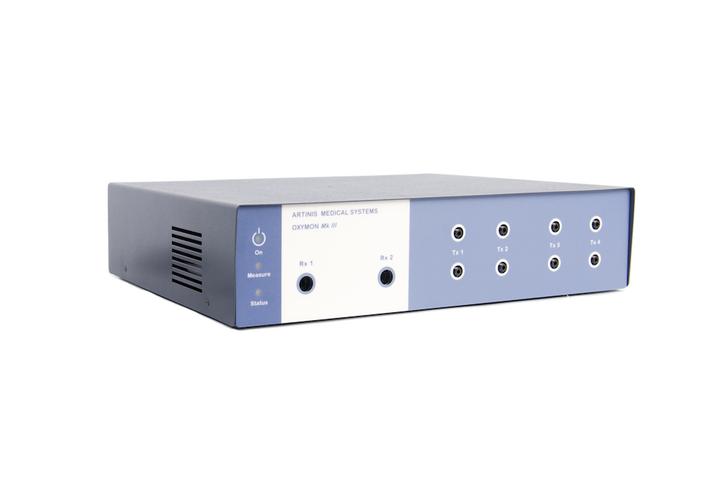
Publications using the OxyMon
Peak oxygen uptake and regional oxygenation in response to a 10-day confinement to normobaric hypoxia
We investigated the effect of hypoxic acclimatization per se, without any concomitant influence of strenuous physical activity on muscle and cerebral oxygenation. Eight healthy male subjects participated in a crossover-designed study. In random …
Prefrontal cortex activation during story encoding/ retrieval: A multi-channel functional near-infrared spectroscopy study
Encoding, storage and retrieval constitute three fundamental stages in information processing and memory. They allow for the creation of new memory traces, the maintenance and the consolidation of these traces over time, and the access and recover of …
Repeated-sprint performance and vastus lateralis oxygenation: Effect of limited O2 availability
This study examined the influence of muscle deoxygenation and reoxygenation on repeated-sprint performance via manipulation of O2 delivery. Fourteen team-sport players performed 10 10-s sprints (30-s recovery) under normoxic (NM: FIO2 0.21) and acute …
Skeletal muscle metabolism in endurance athletes with near-infrared spectroscopy
Purpose: To determine whether near-infrared spectroscopy (NIRS) measurements of muscle mitochondrial function could detect the expected differences between endurance-trained athletes (n = 8) and inactive subjects (n = 8). Methods: Muscle oxygen …
Tissue deoxygenation kinetics induced by prolonged hypoxic exposure in healthy humans at rest
This study aimed to investigate the effects of sustained hypoxic exposure on cerebral and muscle oxygenation and cardiorespiratory function at rest. Eleven healthy subjects inhaled a normobaric hypoxic (FiO2=0.12) or normoxic (FiO2=0.21) gas mixture …
Towards Biometric Person Identification using fNIRS
We investigate the potential of using fNIRS signals for biometric person identification. Independent sessions for training and testing have been recorded using 8 channels of frontal fNIRS. We extract logarithmic power spectral densities as features …
Exercise thermoregulatory responses following a 28-day sleep-high train-low regimen
The potentiated exercise-sweating rate observed during acute hypoxia is diminished after a sleep-high trainlow (SH-TL) regimen. We tested the hypothesis that this attenuation of the sweating response after SH-TL is compensated for by an increase in …
Effects of Aging on Cerebral Oxygenation during Working-Memory Performance: A Functional Near-Infrared Spectroscopy Study
Working memory is sensitive to aging-related decline. Evidence exists that aging is accompanied by a reorganization of the working-memory circuitry, but the underlying neurocognitive mechanisms are unclear. In this study, we examined aging-related …
Measuring workload using a combination of electroencephalography and near infrared spectroscopy
The ability to continuously monitor workload in a real-world environment would have important implications for the offline design of human machine interfaces as well as the real-time improvement of interaction between humans and machines. We explored …
Knee extensor fatigue threshold is related to whole-body V̇O 2max
Purpose: Above a given exercise intensity, rapid muscle fatigue will occur. We explored the possibility of assessing torque threshold for peripheral fatigue during single-legged repetitive isometric knee extensor exercise. We hypothesized this …
Multi-channel NIRS of the primary motor cortex to discriminate hand from foot activity
The poor spatial resolution of near-infrared spectroscopy (NIRS) makes it difficult to distinguish two closely located cortical areas from each other. Here, a combination of multi-channel NIRS and a centre of gravity (CoG) approach (widely accepted …
Reproducibility of near-infrared spectroscopy parameters measured during brachial artery occlusion and reactive hyperemia in healthy men
Near-infrared spectroscopy (NIRS) is a noninvasive technique evaluating microvascular function. The aim of this study was to assess the reproducibility of NIRS parameters during reactive hyperemia induced by a 5 min brachial artery occlusion. …
Time course of the haemodynamic response to visual stimulation in migraine, measured using near-infrared spectroscopy
Background: In patients with migraine, an abnormally large haemodynamic response to epileptogenic visual stimulation has previously been observed, consistent with the hypothesis of a cortical hyperexcitability. Ophthalmic filters have been used in …
A brief review on the use of functional near-infrared spectroscopy (fNIRS) for language imaging studies in human newborns and adults
Upon stimulation, real time maps of cortical hemodynamic responses can be obtained by non-invasive functional near-infrared spectroscopy (fNIRS) which measures changes in oxygenated and deoxygenated hemoglobin after positioning multiple sources and …
Near-infrared spectroscopy assessment following exercise training in patients with intermittent claudication and in untrained healthy participants
Selected near-infrared spectroscopy (NIRS) parameters were assessed in healthy untrained participants and in peripheral arterial disease (PAD) trained patients to evaluate their usefulness in rehabilitative outcome. Forty-five PAD and 15 healthy …
Lipschitz-Killing curvature based expected Euler characteristics for p-value correction in fNIRS
Functional near-infrared spectroscopy (fNIRS) is a non-invasive imaging approach for measuring brain activities based on changes in the cerebral concentrations of hemoglobin. Recently, statistical analysis based on a general linear model (GLM) has …
Review: The evolution of wireless near infrared spectroscopy applications in urology and rationale for clinical use
Near infrared (NIR) spectroscopy is an established non-invasive optical technique for measuring changes in haemoglobin concentration occurring in the microcirculation in real time. NIR spectroscopy parameters refect change in tissue haemodynamics and …
Alveolar gas exchange and tissue oxygenation during incremental treadmill exercise, and their associations with blood O 2 carrying capacity
The magnitude and timing of oxygenation responses in highly active leg muscle, less active arm muscle, and cerebral tissue, have not been studied with simultaneous alveolar gas exchange measurement during incremental treadmill exercise. Nor is it …
Bladder anatomy physiology and pathophysiology: Elements that suit near infrared spectroscopic evaluation of voiding dysfunction
Bladder studies are the most recent biomedical application of NIRS in urology. Transcutaneous monitoring of the detrusor muscle in the bladder wall as the organ fills and empties offers new parameters for evaluation of normal and dysfunctional …
Carbon monoxide exposure during exercise performance: Muscle and cerebral oxygenation
Aim: To investigate the effect of carbon monoxide (CO) in the inspired air as anticipated during peak hours of traffic in polluted megalopolises on cerebral, respiratory and leg muscle oxygenation during a constant-power test (CPT). In addition, …