PortaMon
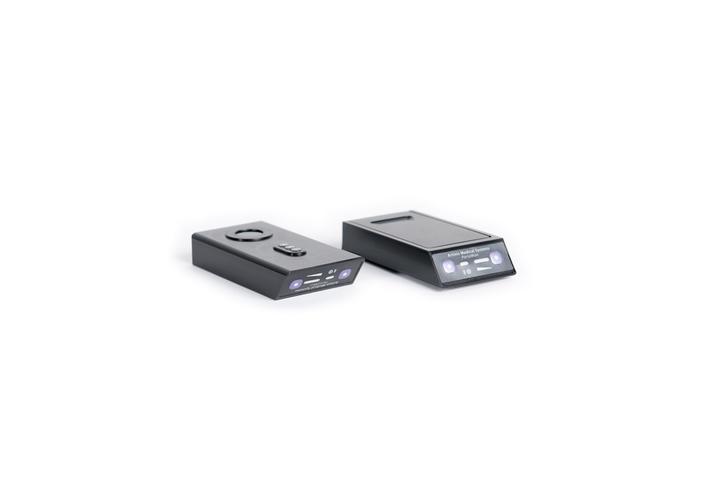
The gold-standard research device for the measurement of muscle oxygenation
Publications using the PortaMon
Positive effect of specific low-frequency electrical stimulation during short-term recovery on subsequent high-intensity exercise
The objective of this study was to test how low-frequency electrical stimulation (LFES; Veinoplus Sport (AdRem Technology, Paris, France)) of the calf muscles affects recovery indices compared with 2 other commonly used recovery methods (active, ACT; …
Skeletal muscle oxidative capacity in amyotrophic lateral sclerosis
Introduction: Mitochondrial dysfunction in the motor neuron has been suspected in amyotrophic lateral sclerosis (ALS). If mitochondrial abnormalities are also found in skeletal muscle, assessing skeletal muscle could serve as an important biomarker …
The evolution of near infrared spectroscopy in urology
In the 50 year history of NIRS, biomedical applications in urology are recent. This review summarizes technical advances and novel enquiry that have led to hemodynamic monitoring of the testis, measures of renal function, evaluation of the pelvic …
Underwater near-infrared spectroscopy measurements of muscle oxygenation: laboratory validation and preliminary observations in swimmers and triathletes
© The Authors.The purpose of this research was to waterproof a near-infrared spectroscopy device (PortaMon, Artinis Medical Systems) to enable NIR measurement during swim exercise. Candidate materials were initially tested for waterproof suitability …
Use of NIRS to assess effect of training on peripheral muscle oxygenation changes in elite rugby players performing repeated supramaximal cycling tests
In most team sports, intermittent high intensity sprint efforts combined with short recovery periods have been identified as a key factor of physical performance; the ability to repeat these efforts at a sustained level is of great importance. …
Is leg compression beneficial for alpine skiers?
Background: This study examined the effects of different levels of compression (0, 20 and 40 mmHg) produced by leg garments on selected psycho-physiological measures of performance while exposed to passive vibration (60 Hz, amplitude 4-6 mm) and …
No effect of upper body compression garments in elite flat-water kayakers
While the effect of lower body compression garments on performance and physiological responses are well documented, no studies have examined the effect of upper body compression garments (UBCG) on upper-body dominant exercise. This study examined the …
Repeated-sprint performance, locomotor profile and muscle oxygen uptake recovery: Effect of training background
The aim of the present study was to examine the respective importance of locomotor profile and muscle oxygen uptake (mV̇ O2) recovery on repeated-sprint ability (RSA) and overall repeated-sprint performance. 11 sprint- (STR) and 10 …
Optical diagnosis of interstitial cystitis / painful bladder syndrome
Background: Painful bladder syndrome/interstitial cystitis (PBS/IC) is defined as a syndrome of urgency, frequency, and suprapubic pain in the absence of positive urine culture or obvious bladder pathology. As no specific etiology has been identified …
Effect of race distance on muscle oxygenation in short-track speed skating
Purpose: Previous work identified an asymmetry in tissue desaturation changes in the left and right quadriceps muscles during on-ice skating at maximal speed in males. The effect of changing race distance on the magnitude of desaturation or leg …
Inspiratory muscle warm-up attenuates muscle deoxygenation during cycling exercise in women athletes
This study examines the effects of inspiratory muscle warm-up (IMW) on performance and muscle oxygenation during cycling exercise. In a randomized crossover study of 10 female soccer players, the IMW, placebo (IMWP) and control (CON) trials were …
NIRS measurements with elite speed skaters: Comparison between the ice rink and the laboratory
Wearable, wireless near-infrared (NIR) spectrometers were used to compare changes in on-ice short-track skating race simulations over 1,500 m with a 3-min cycle ergometry test at constant power output (400 W). The subjects were six male elite …
Skeletal muscle Oxidative function in vivo and ex vivo in athletes with marked hypertrophy from resistance training
Oxidative function during exercise was evaluated in 11 young athletes with marked skeletal muscle hypertrophy induced by long-term resistance training (RTA; body mass 102.6 ± 7.3 kg, mean ± SD) and 11 controls (CTRL; body mass 77.8 ± 6.0 kg). …
The use of portable NIRS to measure muscle oxygenation and haemodynamics during a repeated sprint running test
Portable near-infrared spectroscopy (NIRS) devices were originally developed for use in exercise and sports science by Britton Chance in the 1990s (the RunMan and microRunman series). However, only recently with the development of more robust, and …
Muscle force recovery in relation to muscle oxygenation
The aim of this study was to investigate the relative contribution of human muscle reoxygenation on force recovery following a maximal voluntary contraction (MVC). Ten athletes (22˙9 ± 4˙0 years) executed a plantar-flexion sequence including two …
Evaluation of muscle oxygenation by near-infrared spectroscopy in patients with Becker muscular dystrophy
Several authors have reported alterations in vasodilation during effort in patients with dystrophinopathies, in which a lack of neuronal NO synthase is thought to lead to functional muscle ischemia. In order to determine changes in muscle oxygenation …
Asymmetry of quadriceps muscle oxygenation during elite short-track speed skating
PURPOSE: It has been suggested that, because of the low sitting position in short-track speed skating, muscle blood flow is restricted, leading to decreases in tissue oxygenation. Therefore, wearable wireless-enabled near-infrared spectroscopy (NIRS) …
Monitoring of lower urinary tract function in patients with spinal cord injury using near infrared spectroscopy
Background: One of the most important conditions where there is loss of normal bladder function is spinal cord injury (SCI). Currently, evaluation of bladder function is limited to periodic invasive urodynamic testing (UDS). The purpose of this study …
Review: The evolution of wireless near infrared spectroscopy applications in urology and rationale for clinical use
Near infrared (NIR) spectroscopy is an established non-invasive optical technique for measuring changes in haemoglobin concentration occurring in the microcirculation in real time. NIR spectroscopy parameters refect change in tissue haemodynamics and …
Ambulant monitoring of bladder oxygenation and hemodynamics using wireless near-infrared spectroscopy
INTRODUCTION: Near-infrared spectroscopy (NIRS) non-invasively detects changes in the concentration of the chromophores oxygenated (DeltaO(2)Hb) and deoxygenated hemoglobin (DeltaHHb) as the bladder detrusor muscle contracts during voiding. Such data …