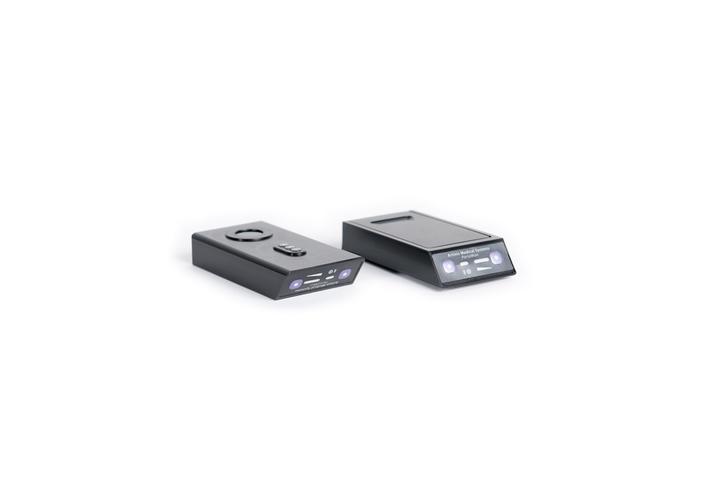
PortaMon
The gold-standard research device for the measurement of muscle oxygenation
Publications using the PortaMon
Biomedical applications of wireless continuous wave near infrared spectroscopy
Progress in research applications of near infrared spectroscopy (NIRS) and growing clinical interest have led to significant improvements in hardware and software. Amongst continuous wave systems the use of light emitting diodes, incorporation of …
Fetal oxygenation measurement using wireless near infrared spectroscopy
Background: Fetal well-being is determined in large part by how well the placenta is able to supply oxygen and nutrients, but current technology is unable to directly measure how well a placenta functions. Near-infrared spectroscopy (NIRS) utilizes …
Muscle contractile properties in patients with repetitive strain injury
Objectives Repetitive strain injury [RSI] is a multi-factorial overuse syndrome that has been associated with local vascular and muscular impairments. Recently, we found vascular changes also in the non-affected site, which is suggestive for systemic …
The use of near-infrared spectroscopy in understanding skeletal muscle physiology: Recent developments
This article provides a snapshot of muscle near-infrared spectroscopy (NIRS) at the end of 2010 summarizing the recent literature, offering the present status and perspectives of the NIRS instrumentation and methods, describing the main NIRS studies …
Assessing running economy during field running with changes of direction: Application to 20 m shuttle runs
Purpose: To examine physiological responses to submaximal field running with changes of direction (COD), and to compare two approaches to assess running economy (RE) with COD, ie, during square-wave (SW) and incremental (INC) exercises. Methods: Ten …
Reproducibility and sensitivity of muscle reoxygenation and oxygen uptake recovery kinetics following running exercise in the field
The purpose of this study was to assess the reliability of postexercise near-infrared spectroscopy (NIRS)-derived measurements and their sensitivity to different exercise intensities in the field. Seventeen athletes (24˙1±5˙6year) repeated, on three …
Near-Infrared Spectroscopy of the Bladder: New Parameters for Evaluating Voiding Dysfunction
We describe innovative methodology for monitoring alterations in bladder oxygenation and haemodynamics in humans using near-infrared spectroscopy (NIRS). Concentrations of the chromophores oxygenated (O 2 Hb) and deoxygenated (HHb) haemoglobin and …
Influence of training and maturity status on the cardiopulmonary responses to ramp incremental cycle and upper body exercise in girls
It has been suggested that the potential for training to alter the physiological responses to exercise in children is related to a "maturational threshold". To address this, we investigated the interaction of swimtraining status and maturity on …
Dietary nitrate supplementation enhances exercise performance in peripheral arterial disease
Peripheral arterial disease (PAD) results in a failure to adequately supply blood and oxygen (O2) to working tissues and presents as claudication pain during walking. Nitric oxide (NO) bioavailability is essential for vascular health and function. …
Effect of endurance training on performance and muscle reoxygenation rate during repeated-sprint running
The aim of the present study was to examine the effect of an 8-week endurance training program on repeated-sprint (RS) performance and post-sprints muscle reoxygenation rate in 18 moderately trained males (34 ± 5 years). Maximal aerobic speed (MAS), …
Performance and physiological responses to repeated-sprint and jump sequences
In this study, the performance and selected physiological responses to team-sport specific repeated-sprint and jump sequence were investigated. On four occasions, 13 team-sport players (22 ± 3 year) performed alternatively six repeated maximal …
Near-infrared spectroscopy of the bladder: a new technique for studying lower urinary tract function in health and disease
Background: Continuous wave near-infrared spectroscopy (NIRS) can monitor chromophore change in the bladder detrusor muscle during voiding; oxygenation and hemodynamic data derived differ in health and disease. Application of wireless NIRS for …
Muscle tissue oxygenation and VEGF in VO2-matched vibration and squatting exercise
Summary: Exposure to vibration has traditionally been associated with compromised perfusion. This study investigated whether blood supply during whole body vibration (WBV), as an exercise modality, is in proportion to the metabolic demand by the …
Physiological responses to shuttle repeated-sprint running
This study investigated the influence of 180° changes of direction during a repeated-sprint running test on performance, cardiorespiratory variables, muscle deoxygenation and post-exercise blood lactate ([La] levels. Thirteen team-sport athletes …
Effect of prior exercise on pulmonary O2 uptake and estimated muscle capillary blood flow kinetics during moderate-intensity field running in men
The effect of prior exercise on pulmonary O2 uptake (V̇O2 p) and estimated muscle capillary blood flow (Q̇m) kinetics during moderate-intensity, field-based running was examined in 14 young adult men, presenting with either moderately fast (16 s
Wireless near-infrared spectroscopy of skeletal muscle oxygenation and hemodynamics during exercise and ischemia
The majority of in vivo applications of near-infrared spectroscopic (NIRS) monitoring use continuous wave instruments that require a fiberoptic cable connection between the subject and the instrument during monitoring. In studies of muscle …